

Windsong’s curriculum provides a synthesized approach to a wide range of academic subjects including literacy instruction, mathematics, the sciences, history, geography, and foreign languages. The fine and practical arts, music, and movement are infused through all parts of the academic curriculum and are also standalone subjects taught by specialty teachers. The developmental needs of the child provide the framework for the curriculum, daily schedule, and the way in which all subjects are brought to the children.
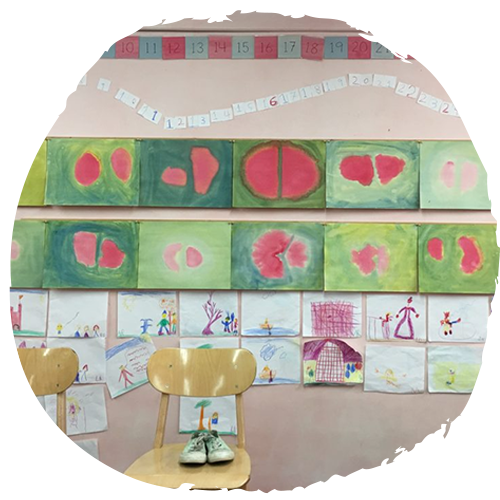
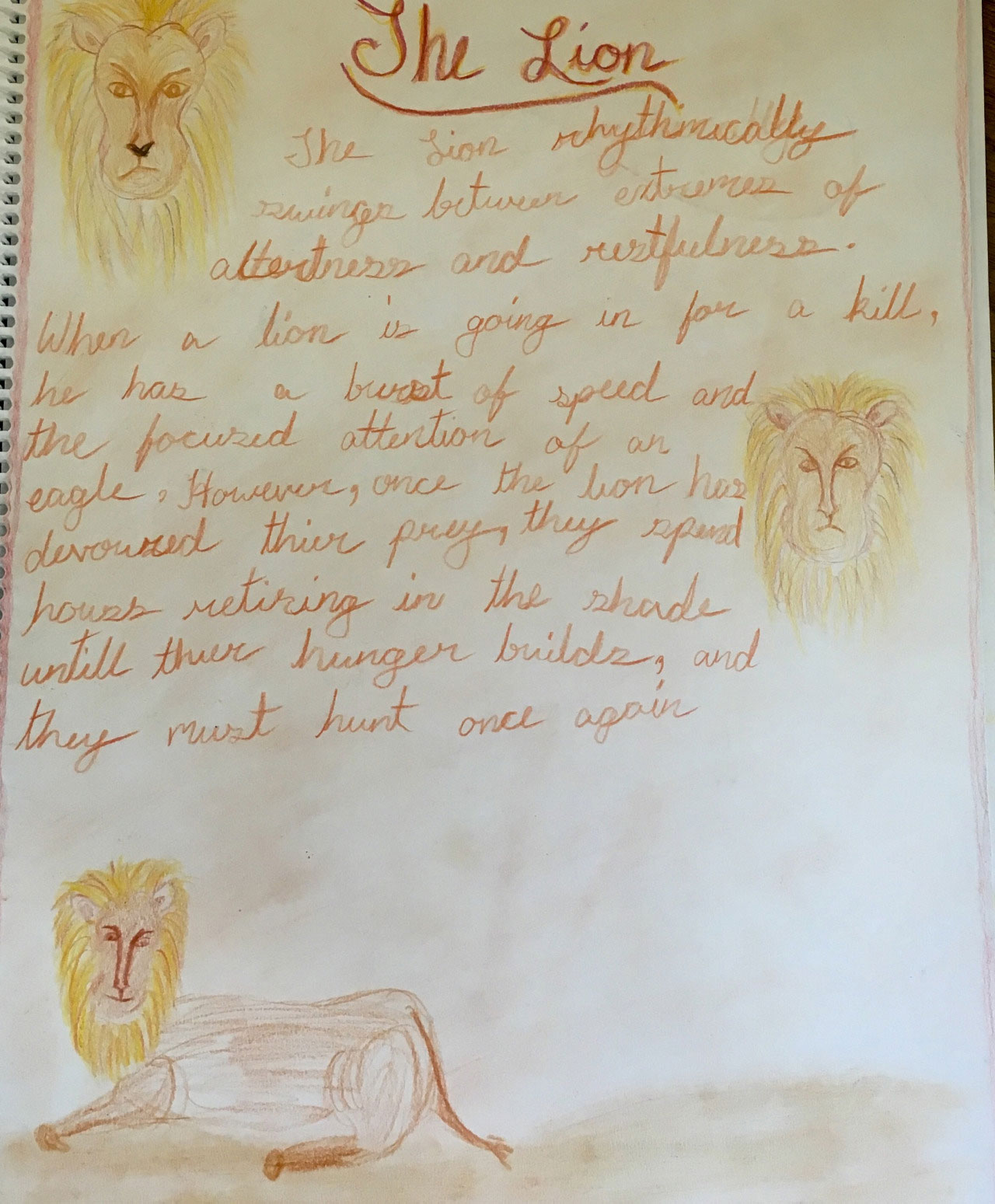
The focus each morning is the main lesson, where reading, writing, math, history, geography, and the sciences are taught. Though the curriculum is masterfully integrated, students focus on one subject at a time more intensely in block rotations, and recapitulate previous learning in a future block to more deeply integrate what has been learned. Students design, write, and illustrate textbooks for each subject – these “main lesson books” become cherished keepsakes and a source of well-earned pride for the children.
Form drawing is practiced to support reading, writing, spatial discrimination, the development of concentration and an appreciation for beautiful, precise work.





grades teachers provide parents with an End of Year Report, a thorough written description of a student’s academic progress and personal growth. Homework is given at the teacher’s discretion, and it is not unusual for students to begin receiving substantial homework starting in sixth grade. Delaying and reducing homework demands is done in order for the children to continue to reap the lifelong benefits of play, family interaction, and contribution to household chores. Windsong School does not administer standardized state tests. Teachers plan formative and summative assessments to augment careful classroom observations, and learning specialists from Waldorf Schools may be invited to provide helpful developmental and academic observations. As students and teacher travel together through the grades they trace the arc of human development and learn the true meaning of community.
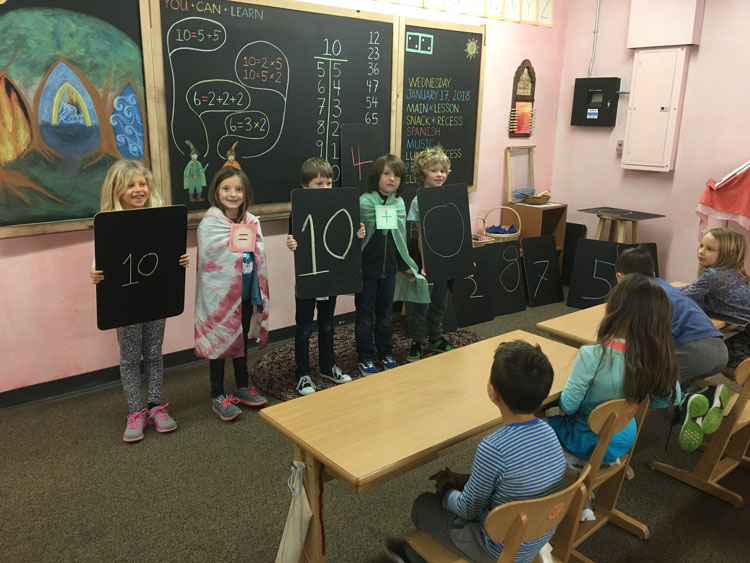
In first grade, children are gloriously ripe for structured academic learning. The seven-year old is ready to formally build on the foundations for literacy and numeracy nurtured in the Kindergarten. These foundations serve as critical supports for lifelong learning and robust, confident thinking. In first grade, literacy begins with a love of language. Students are immersed in a rich vocabulary and vivid imagery through the practice of oral storytelling.
Uppercase letters are introduced in a way that brings joy to children – through pictograms or movements that evoke the letter’s essence, and students learn to read by writing and playing with the sounds of language.
The development of a “sense of number” (numeracy) is critical for using arithmetic and understanding mathematics. Much time is spent building this scaffolding which is necessary for all future work in mathematics.The strength of Windsong’s curriculum lies in its attention to foundations and capacities. Daily artistic activities allow children to take hold of all they have learned during the school day, movement in every lesson serves to build up children’s mental pathways for learning, and a breathing rhythm to the school day allows children to settle into their work.
Each year the curriculum changes to meet children where they are developmentally, and in first grade the fairy tales serve as the leitmotif for the year. Windsong educators work with the child’s changing consciousness, guiding growth according to developmental unfolding, rather than directing growth from the outside according to outcome-based mandates.
In first grade, students still naturally feel themselves very much part of the group. In second grade, students begin to loosen up from the group a bit – they start to feel themselves more as individuals. They are ready to try out “standing on their own two feet”, and they experience this as a new sense of freedom. Though up to now, children have been living with parental and cultural group ethics, this new flirtation with freedom ushers in the possibility of conscious moral development. Second graders are experimenting with freedom, and begin to develop a moral code. This means they are often very naughty! Trickster tales and Aesop’s fables reflect this naughtiness, and serve as a common thread throughout the year.
Separation from the group brings with it the experience of duality. This is addressed in the curriculum with a focus on polarities – me and you, up and down, mine and not mine, fast and slow, ad infinitum. In a year of duality, the polar opposite of the fables must be brought as well, and consequently stories of heroes and saints also form a theme for the year.
Students continue working with the four processes, addition and subtraction, and multiplication and division. Place value is taught this year and students continue to memorize math facts such as the multiplication and division tables. Cursive writing is often introduced and students begin working more explicitly with phonics and the mechanics of reading.
At some point in the third or fourth grade year, students will realize that childhood is ending. This is often referred to as the “9-year change”. The story that most perfectly meets the inner experience of this realization is the story of Adam and Eve’s expulsion from the Garden of Eden.
Freedom has a new feel to it in the third grade. The thrill of naughtiness has worn off and the full import of freedom begins to take hold of the soul – freedom and independence are understood to be linked. The gravity of this situation does not escape the child, and they seem heavier day by day.
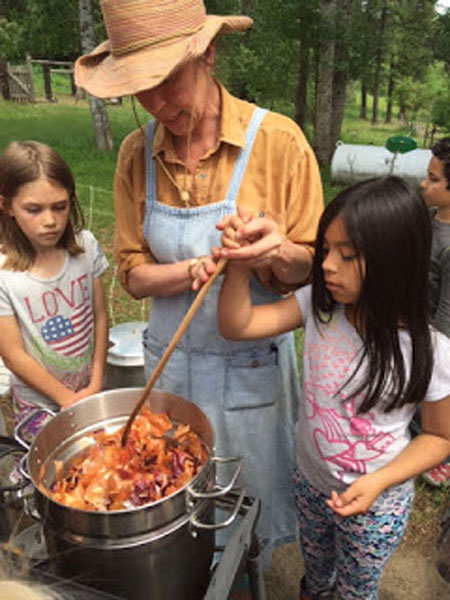
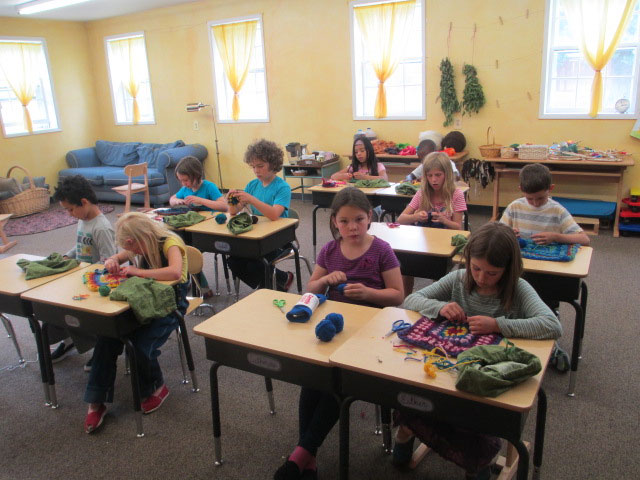
Supporting a child’s confidence in his or her ability to become independent is the gesture of the Third-Grade year. This is done through helping children develop practical skills, learning about human vocations and how people make a way for themselves in the world and experiencing the world with many curriculum-based field trips.
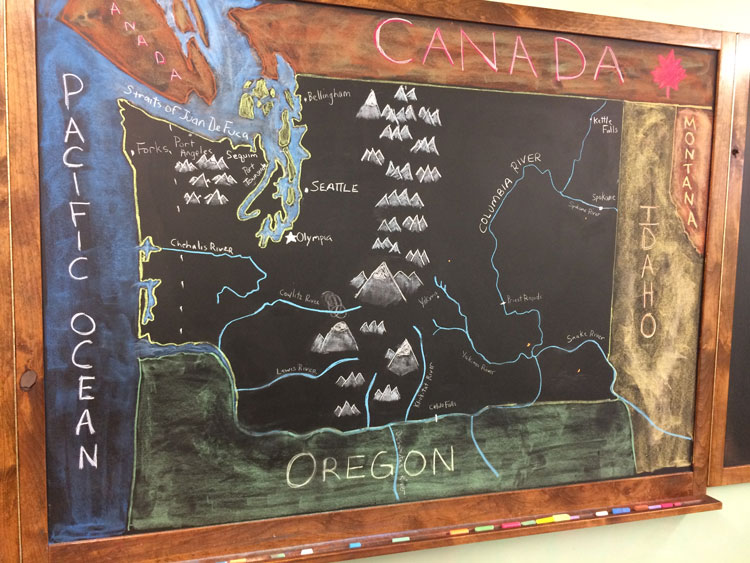
Fourth graders have grown a bit sturdier than their third-grade counterparts, both emotionally and physically. During the year, they will have come through the storm of the 9- year transformation and are building connections with the world they now fully inhabit.
Imagination and thinking no longer weave together in a magical fantasy, and students are able to think objectively. For this reason, the year brings opportunities to practice objectivity in geography and zoology blocks of study.
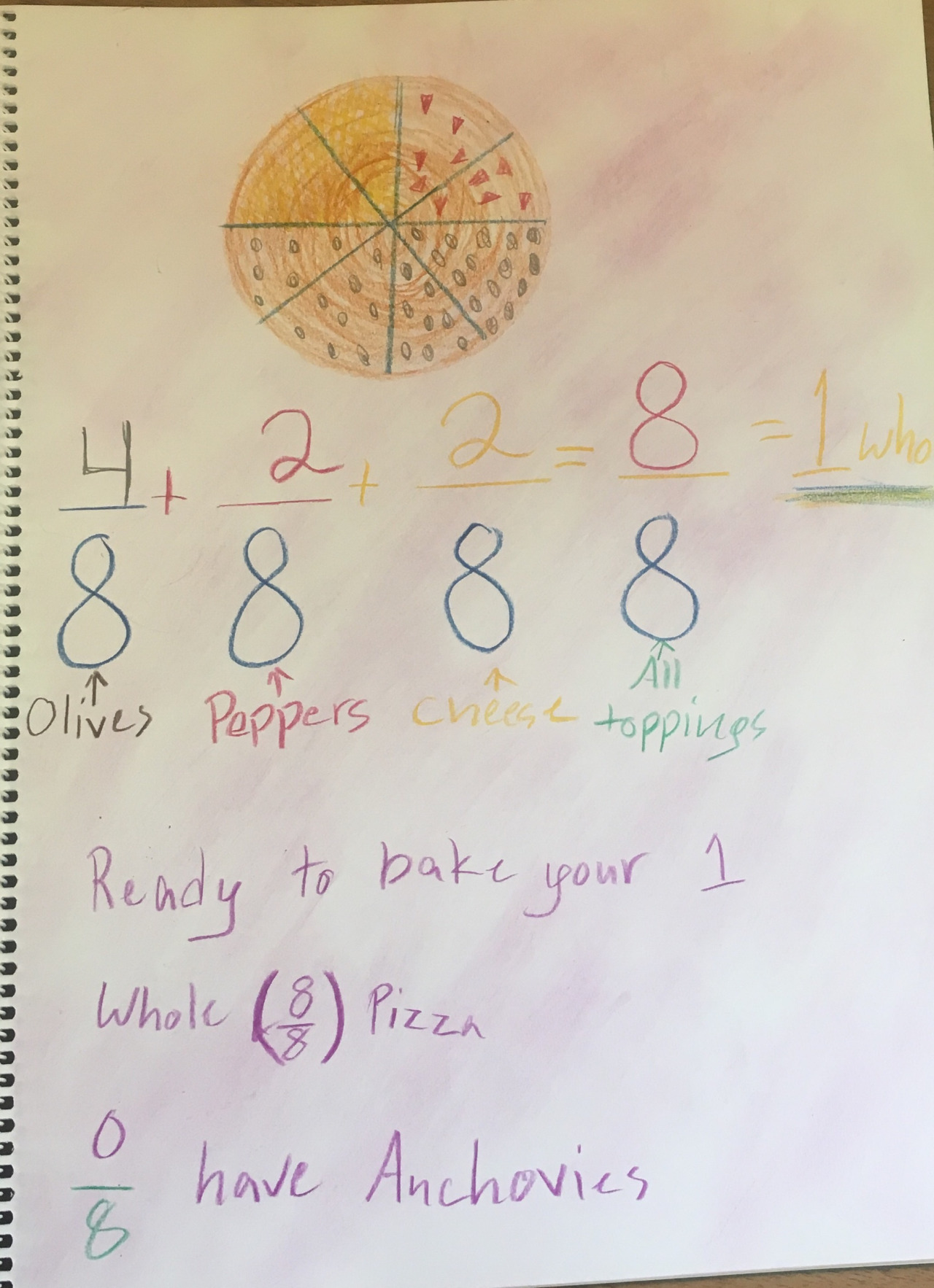
Fourth grade is the year when everything falls into pieces. Numbers fall into pieces with fractions, the class play falls into pieces with everyone having an individual part, writing falls into pieces with a focus on grammar, the familiar world around us is partitioned into pieces with mapping and the one God of Genesis is replaced by the many gods of the Norse myths. However, there are threads that hold these pieces together, that relate them to one another, and these relationships can be examined. How does 1⁄2 relate to 1⁄4? Every part in the play relates to the other parts. How do the parts of speech relate to the meaning of a sentence, how do sentences relate to the meaning of a passage? How do the parts of a map hold the sense of the whole? The Norse gods certainly do a lot of “relating” to one another.
Everything falls apart, everything changes, but there are still relationships that tie it all together. This realization, even if largely subconscious, is a wonderful support for young people who have fallen out of unison with the people around them, who are experiencing separation, and need to know how to build ties between themselves and the world.
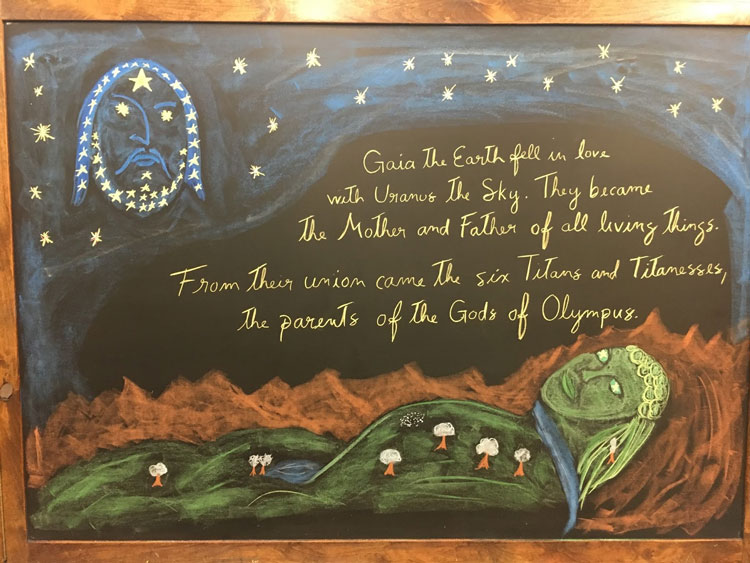
Fifth graders have gained a measure of self-assurance with the accumulation of experience and academic skills. Little do they know that they stand at the fulcrum point between childhood and adulthood, and the coming onset of adolescence will bring more opportunities to grow through the struggle of major life transitions. Fifth grade students study the Greek myths, and often reenact the Pentathlon as part of their studies. To get a feel for fifth grade, imagine a student preparing to (beautifully) throw a javelin – fifth grade would be the moment when the arm has withdrawn in preparation for launching (into puberty, in this case).
Students study the world with the capacity for objectivity that emerged in fourth grade. This year botany is a major block of study, and students practice observing the world with focus. The world around can be viewed anew as students discover previously hidden properties of plants.
Geography expands outward as students study North American geography. Decimals and percentages are introduced to complement the fifth grader’s knowledge of fractions. Students also begin to study geometry and combine aesthetics and math to create freehand geometric forms.
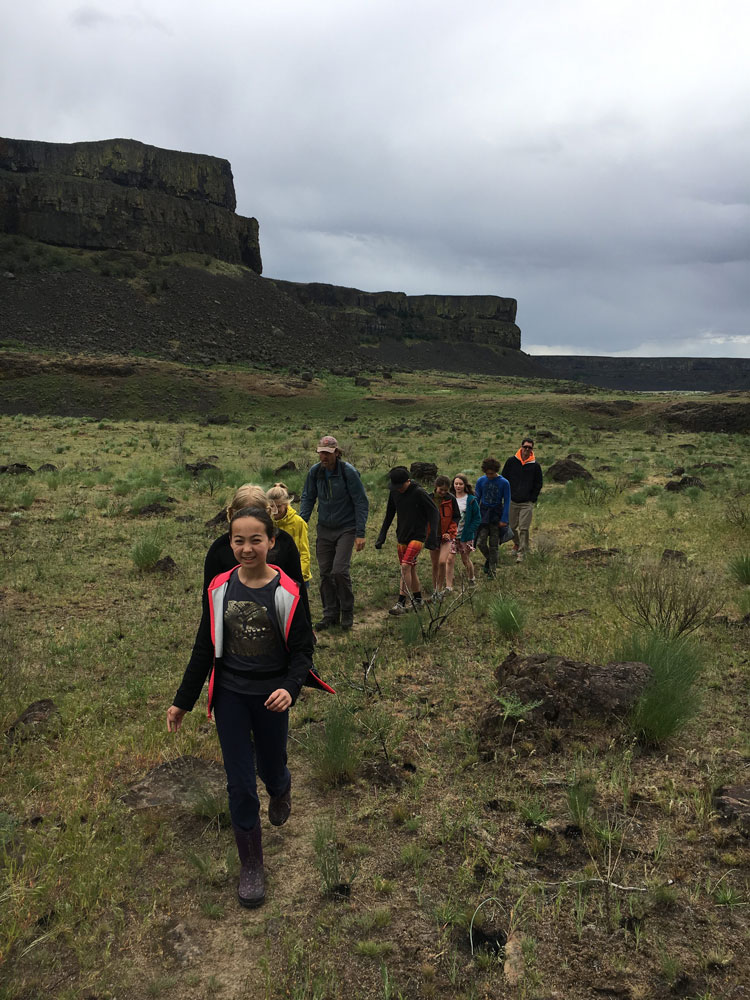
The clumsiness of sixth and seventh grade students is legendary. In the sixth-grade, students contend with the physical, cognitive and emotional changes brought about by puberty. The physical clumsiness caused by physical changes is mirrored by cognitive and emotional clumsiness. Social clumsiness also abounds, and is one reason why students in middle school can have a “bad reputation”.
Sixth grade students often shock parents and teachers with the development of what seems an un-nuanced “black and white” moral code. Sixth graders, in many ways, are beginners all over again. For beginners, structure and rules are welcomed supports. Students often begin to play organized sports in P.E. class, and during recess tend toward games with clear and absolute rules.
Rome, with its system of laws and imposition of authority, mirrors the sixth grader’s desire for order. Geography continues to expand outward with studies of Africa and Europe.
Students continue to practice scientific observation with the study of minerals and geology. As sixth graders feel themselves grow more dense and “earthbound” day by day, the study of earth and its properties resonates with their reality. To complement this study, astronomy is brought, as well.
Physics is an exciting course of study in the sixth-grade year, as students have the cognitive capacity to work with abstractions and the laws of cause and effect appeal to their desire for order and consequence. Business math and geometry comprise the mathematics curriculum.
Description of 7th Grade coming soon!
Description of 8th Grade coming soon!

In June of 2018, our Early Childhood Program was granted Full Membership into the Waldorf Early Childhood Association of North America, the accrediting body for Waldorf early childhood programs. This is a great honor and the culmination of years of hard work by our entire Early Childhood faculty and staff.
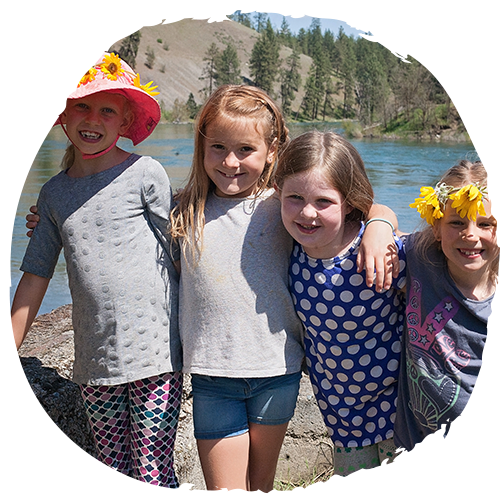
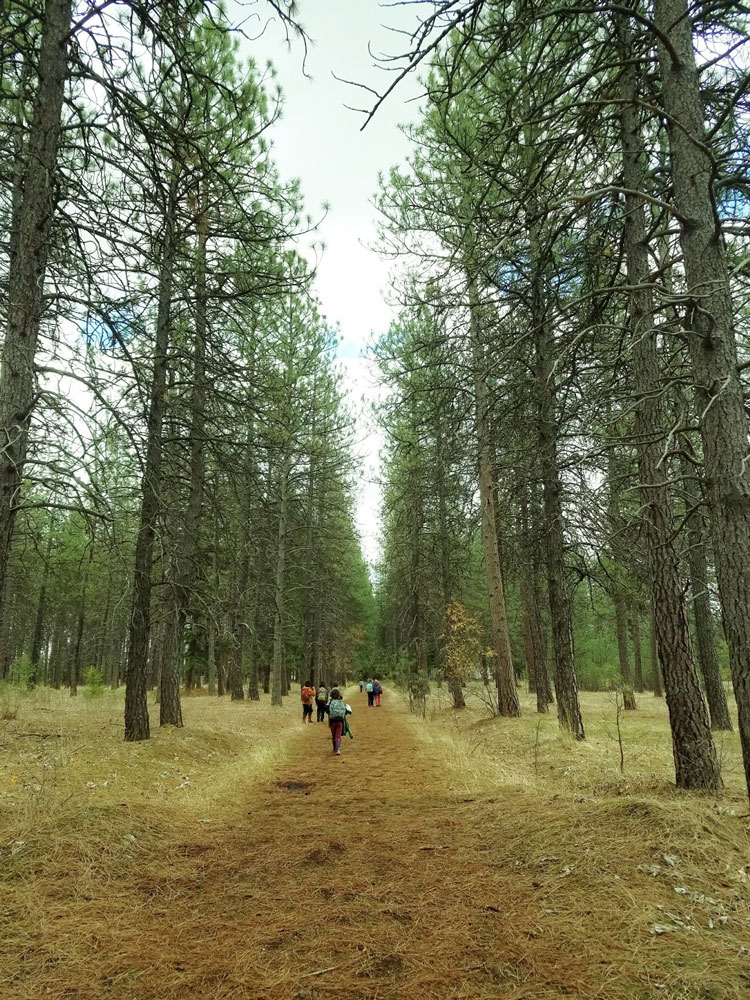
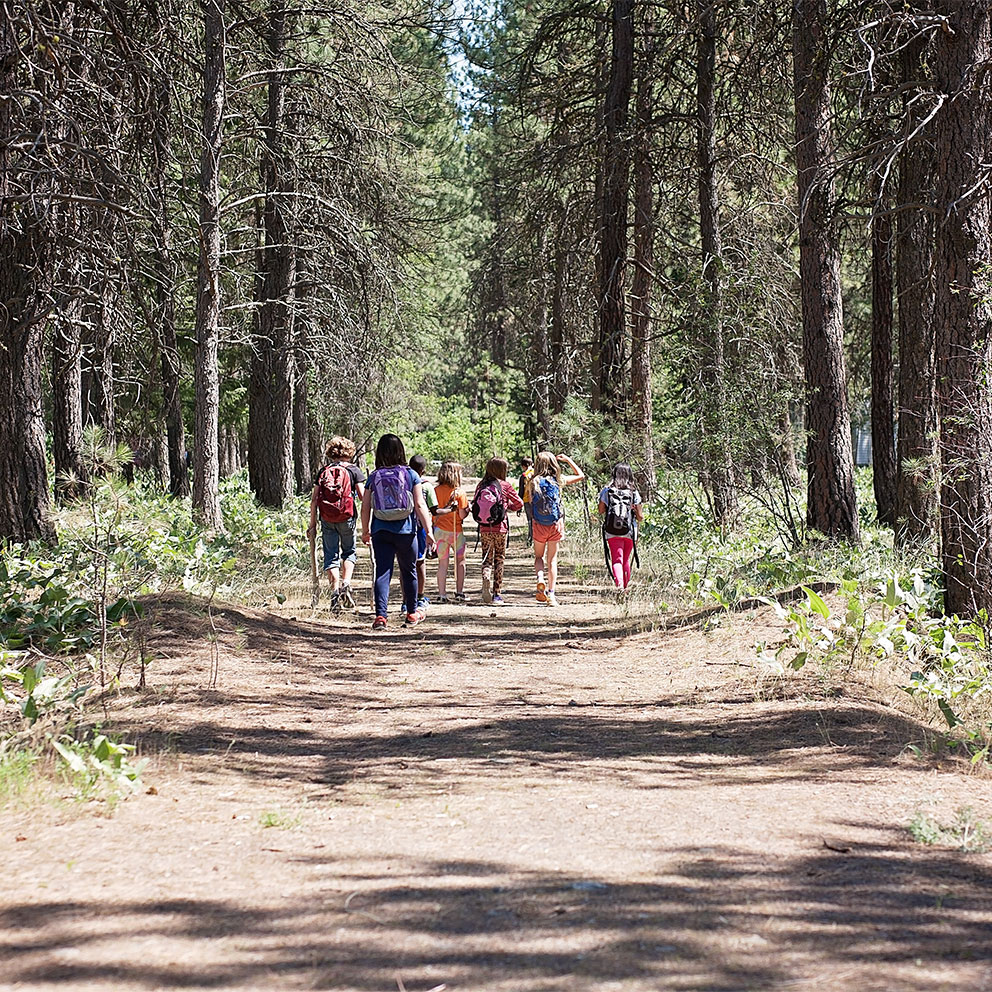
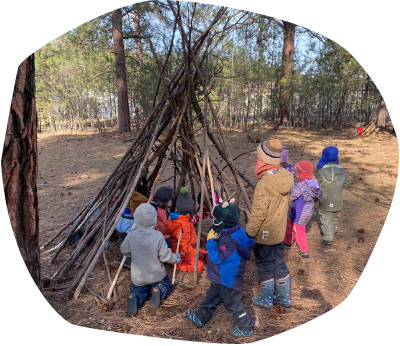
Located less than 10 minutes from downtown Spokane, we are fortunate to be situated on the gorgeous and historic, Mukogawa U.S. Campus. Our classes have access to acres of meadow and wooded area, Riverside State Park, and the beautiful Spokane river. All of our classes spend at least an hour in nature every day. For our grades students, Fridays are spent hiking down to the river after their main morning lessons.
Our location on the Mukogawa U.S. Campus affords our students many opportunities to learn about and experience Japanese culture. Our grades students take both Spanish and Japanese classes from native speakers twice per week. The goal of these classes isn’t merely learning a foreign language, but gaining a deep, genuine knowledge and understanding of other cultures.
Waldorf education is based on observations of child development, much of which is backed up with modern scientific research. Every class at Windsong is designed with child development at the forefront. Meeting the children where they are at is nurturing to their whole being. It allows them to flourish and truly live into the curriculum.
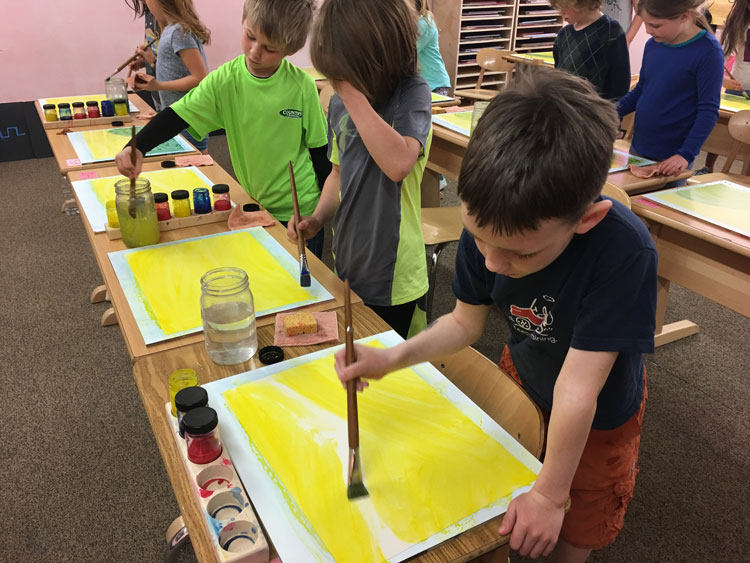
At Windsong, art is not taught as a separate subject, but rather as a means through which to understand and see the world. All the subjects in our grades classes are brought through chalk drawing, painting, modeling, dramatic performances, songs, etc. In our early childhood classes the children also engage in an artistic pursuit each day.

Get the latest updates and upcoming events delivered to your inbox.




© Windsong School
All rights reserved.
Wecan full member.
Created with ♡ by Art Mercz Design